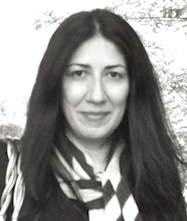
Academic background
Postdoctoral Fellowship, Leiden University, Leiden, The Netherlands (2009-2013)
PhD Neuroscience (2004-2009, McGill University, Montreal)
- Thesis: Observing the Stressed Brain: Magnetic Resonance Imaging of the Neural Correlates of Hypthalamus Pituitary Adrenal Axis Function
- Supervisors: Drs. Jens C. Pruessner and Alan C. Evans.
Master of Art: Film & Media Studies (2001-2008, part-time, Mel Hoppenheim School of Cinema, Montreal)
- Research Focus: Audience and Reception Studies; National Cinemas; Postmodern cultural theory.
- Advisors: Drs. Mario Falsetto, Rosanna Maule, Erin Manning, Peter Rist
Master of Biomedical Engineering (1998-2001; McGill University, Montreal)
- Master's Thesis: Design and Implementation of 3D Orbital Navigator Echoes for Measurement of Rigid Body Motion in Echo Planar Magnetic Resonance Imaging. Slides
- Supervisor: Dr Bruce Pike
Bachelor of Electrical Engineering (1995-1998; Concordia University, Montreal)
- Undergraduate thesis: Computational Modelling (FDTD) of Electromagnetic Radiation of Cellular Phone Antenna in the User's Head.
- Supervisors: Drs. Christopher W. Trueman
Current Projects
-
I have recently returned to Professor Evan's lab as a research associate. I will be contributing to further development of the CBrain platform for translational neuroimaging research.
I have ongoing collaborations with professors Albert Dahan, and Serge Rombouts in Leiden University Medical Center, and through examining drug effects on cerebral perfusion and functional connectivity, investigate the cerebrovascular and the neurochemical substrates of brain functional networks, with the ultimate aim to develop objective biomarkers for detecting abnormal brain function--in disease and development.
Please email for further information.
- Master's Thesis: Design and Implementation of 3D Orbital Navigator Echoes for Measurement of Rigid Body Motion in Echo Planar Magnetic Resonance Imaging. Slides
- Supervisor: Dr Bruce Pike
Master of Biomedical Engineering (1998-2001; McGill University, Montreal)
- Undergraduate thesis: Computational Modelling (FDTD) of Electromagnetic Radiation of Cellular Phone Antenna in the User's Head.
- Supervisors: Drs. Christopher W. Trueman
Bachelor of Electrical Engineering (1995-1998; Concordia University, Montreal)
I have ongoing collaborations with professors Albert Dahan, and Serge Rombouts in Leiden University Medical Center, and through examining drug effects on cerebral perfusion and functional connectivity, investigate the cerebrovascular and the neurochemical substrates of brain functional networks, with the ultimate aim to develop objective biomarkers for detecting abnormal brain function--in disease and development.
Please email for further information.Publications
- Khalili-Mahani N, Niesters M, van Osch MJ, Oitzl M, Veer I, de Rooij M, van Gerven J, van Buchem MA, Beckmann CF, Rombouts SA, Dahan A Ketamine interactions with biomarkers of stress: A randomized placebo-controlled repeated measures resting-state fMRI and PCASL pilot study in healthy men. .Neuroimage. 2014 Dec 29. pii: S1053-8119(14)01042-8. doi: 10.1016/j.neuroimage.2014.12.050. [Epub ahead of print]
- Marieke Niesters, Elske Sitsen, Linda Oudejans, Leon Aarts, Mark A. van Buchem, Serge A.R.B. Rombouts, Mischa de Rover, Najmeh Khalili-Mahani, Albert Dahan, Deafferentiation augments pain perception associated with enhanced thalamo-cortical connectivity Brain Connectivity, 2014
- Najmeh Khalili Mahani, Catie E Chang, Matthias J. P. van Osch, Christian Beckmann, Ilya M Veer, Albert Dahan, Mark A. van Buchem, Joop M. A. van Gerven and Serge A. R. B. Rombouts, Effect of Physiological Correction on functional connectivity analysis of pharmacological Resting state fMRI Neuroimage, 2013 Jan 15;65:499-510.
- Marieke Niesters, Najmeh Khalili Mahani, Joop van Gerven, Albert Dahan, Serge Rombouts, Effect of sub-anesthetic ketamine on intrinsic functional brain connectivity - A placebo-controlled functional MRI study in healthy male volunteers Anesthesiology, 2012
- Linda E. Klumpers, David M. Cole, Najmeh Khalili-Mahani, Roelof P. Soeter, Serge A.R.B. Rombouts, Joop M.A. van Gerven Manipulating brain connectivity with 9-tetrahydrocannabinol: a pharmacological resting state FMRI study Neuroimage. 2012 Nov 15;63(3):1701-11
- Najmeh Khalili Mahani, Matthias J. P. van Osch, Christian Beckmann, Albert Dahan, Mark A. van Buchem, Joop M. A. van Gerven and Serge A. R. B. Rombouts Spatial Heterogeneity of the Relation Between Resting State Connectivity and Blood Flow: An Important Consideration for Pharmacological Studies Hum Brain Mapp. 2012 Dec 26. doi: 10.1002/hbm.22224
- Najmeh Khalili-Mahani, Remco M.W. Zoethout, Christian F. Beckmann, Evelinda Baerends, Marieke L. de Kam, Roelof P. Soeter, Albert Dahan, Mark A. van Buchem, Joop M.A. van Gerven, Serge A.R.B. Rombouts Effects of morphine and alcohol on functional brain connectivity during resting state :A placebo-controlled crossover study in healthy young men Hum Brain Mapp. 2011.
- Najmeh Khalili-Mahani, Matthias J. P. van Osch, Evelinda Baerends, Roelof P Soeter, Marieke de Kam, Remco W. M, Zoethout, Albert Dahan, Mark A. van Buchem, Joop M. A. van Gerven and Serge A. R. B. Rombouts Pseudocontinuous arterial spin labeling reveals dissociable effects of morphine and alcohol on regional cerebral blood flow J Cereb Blood Flow Metab. 2011 May;31(5):1321-33. Epub 2011 Jan 19.
- Engert V, Buss C, Khalili-Mahani N, Wadiwalla M, Dedovic K, Pruessner JC Investigating the association between early life parental care and stress responsivity in adulthood Dev Neuropsychol. 2010 Sep;35(5):570-81
- Najmeh Khalili-Mahani, Katarina Dedovic, Veronika Engert, Marita Pruessner, Jens C. Pruessner Hippocampal activation during a cognitive task is associated with subsequent neuroendocrine and cognitive responses to psychological stress Hippocampus. 2010 Feb;20(2):323-34.
- N Khalili-Mahani, C Buss, V Engert, AC Evans, JC Pruessner Baseline Hypothalamic Pituitary Adrenal Axis Function Predicts Variations in the Cortical Thickness of the Left Anterior Cingulate Cortex In Older Adults NeuroImage,2009 Jul 47:(S1), S39-S41
- Colliot O, Bernasconi N, Khalili N, Antel SB, Naessens V, Bernasconi A. Individual Voxel-based Analysis of Gray Matter in Focal Cortical Dysplasia Neuroimage. 2006 Jan 1;29(1):162-71
- Dedovic K, Renwick R, Mahani NK, Engert V, Lupien SJ, Pruessner JC The Montreal Imaging Stress Task: using functional imaging to investigate the effects of perceiving and processing psychosocial stress in the human brain J Psychiatry Neurosci. 2005 Sep;30(5):319-25
- Pruessner JC, Baldwin MW, Dedovic K, Renwick R, Mahani NK, Lord C, Meaney M, Lupien S. Self-esteem, locus of control, hippocampal volume, and cortisol regulation in young and old adulthood Neuroimage. 2005 Dec;28(4):815-26.
- Pruessner JC, Dedovic K, Khalili-Mahani N, Engert V, Pruessner M, Buss C, Renwick R, Dagher A, Meaney MJ, Lupien S. Deactivation of the limbic system during acute psychosocial stress: evidence from positron emission tomography and functional magnetic resonance imaging studies. Biol Psychiatry. 2008 Jan 15;63(2):234-40
- Najmeh Khalili Mahani, Observing the stressed brain: Magnetic Resonance Imaging of the Neural Correlates of Hypothalamic Pituitary Adrenal Axis Function, E-thesis published by McGill University, http://gradworks.umi.com/NR/66/NR66616.html
Links
Naj dot Mahani at gmail dot com
created: 22 Jun 2000
Under construction